Jump to content
Menü Button MENU
0
MENÜ
BUCHEN
Booking
0

That's How the North Works

Reserved, cool, taciturn, and somehow a little strange. As is well known, there are plenty of stereotypes about us Northern Germans. And yes, we’ll admit it: Chatter isn’t really our thing, our sense of humor takes some getting used to, and our clothes are more practical than stylish. But once you’ve come to understand our language, our sense of humor, and our mindset, you’ll quickly realize: Northern Germans are actually pretty easy to get along with. Want a quick crash course on “typical Northern German—this is how we Northern Germans tick”?  

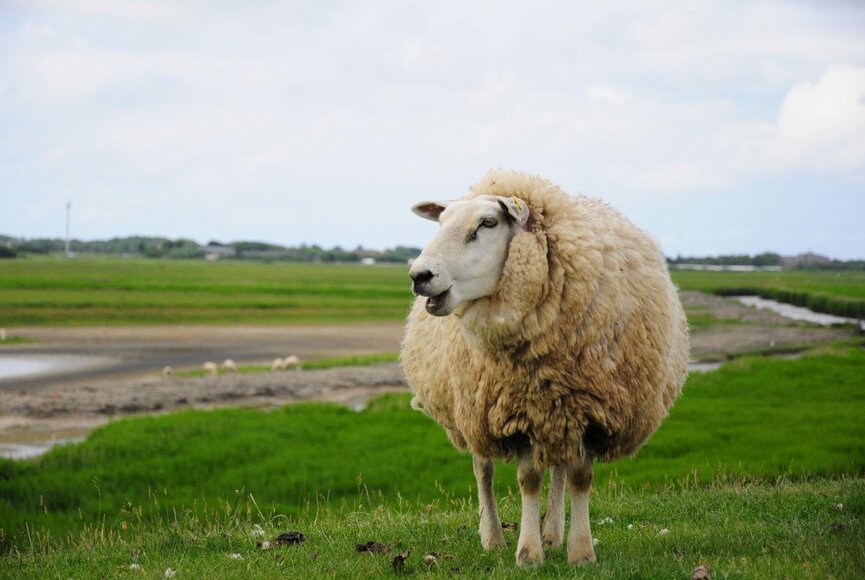
A sheep in a meadow
Cut the crap!

Our Language

Did you actually know that we here on the North Sea coast are true linguistic talents? Most of us speak Standard German, low german, and fluent irony. 

There’s one thing you should definitely keep in mind when striking up a conversation with a North German: Less is more up north!  

You can’t really go wrong with a simple “Moin” as a greeting, no matter what time of day it is. But if you go overboard with the greetings and the “Moin,” you’ll quickly realize: twice isn’t always better. 

The rule is:  

One “Moin” isn’t a “Moin”; two “Moin”s are one “Moin” too many.  

Or as a Northern German would say: “Moin Moin—that’s just chatter.” 

And around here, if there’s any chatter at all, it only happens during a cozy "Klönschnack" (conversation)!
Icon von einem Herz

You should know these low german words!

  • "Klönschnack" (conversation) 
  • "Fenne" (field) 
  • "Feudel/feudeln" (floor cloth / to mob the floor) 
  • "Buddel" (bottle) 
  • "Dösbaddel" (clumsy person) 
  • "mucksch" (sulky)
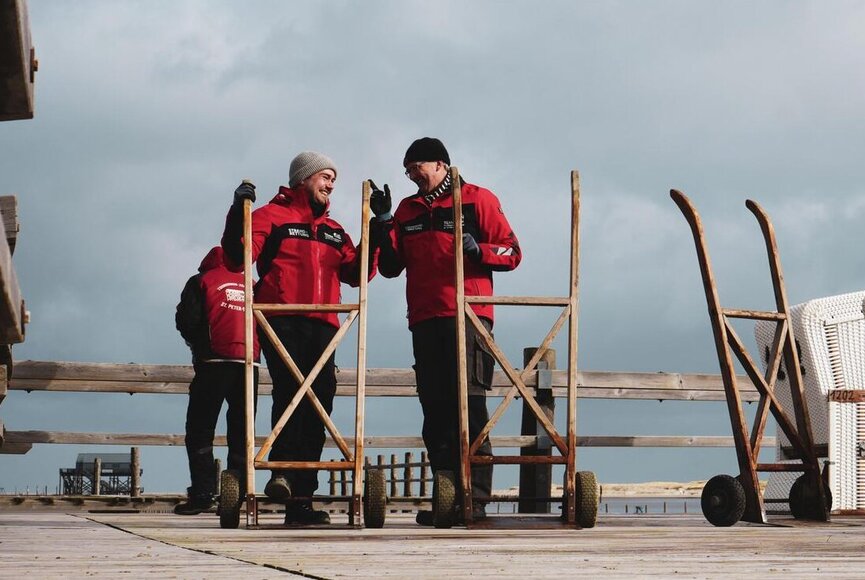
Our beach staff are laughing together
Are you serious?

Our Sense of Humor

One thing is certain: When stormy weather hits, nothing here on the North Sea coast stays dry. Although… there is one exception. Because our sense of humor here on the North Sea coast is just as flat as our land and just as dry as a slice of bread that’s been sitting in the bread box too long. Of course, a little sarcasm is a must, too.  

The problem: Not everyone gets this kind of humor, which is why communication can be a bit tricky from time to time.  

Our tip: What North Germans say isn’t always meant literally. So don’t take every word too seriously. Then you can all have a good laugh together! 

Two North Frisians in traditional clothing—rain boots and rain jackets
It has to be practical!

Our Clothing

To cope with the stormy fall days on the North Sea coast, you definitely need rain gear—no doubt about it. But here in the far north, not all rain jackets are created equal! 

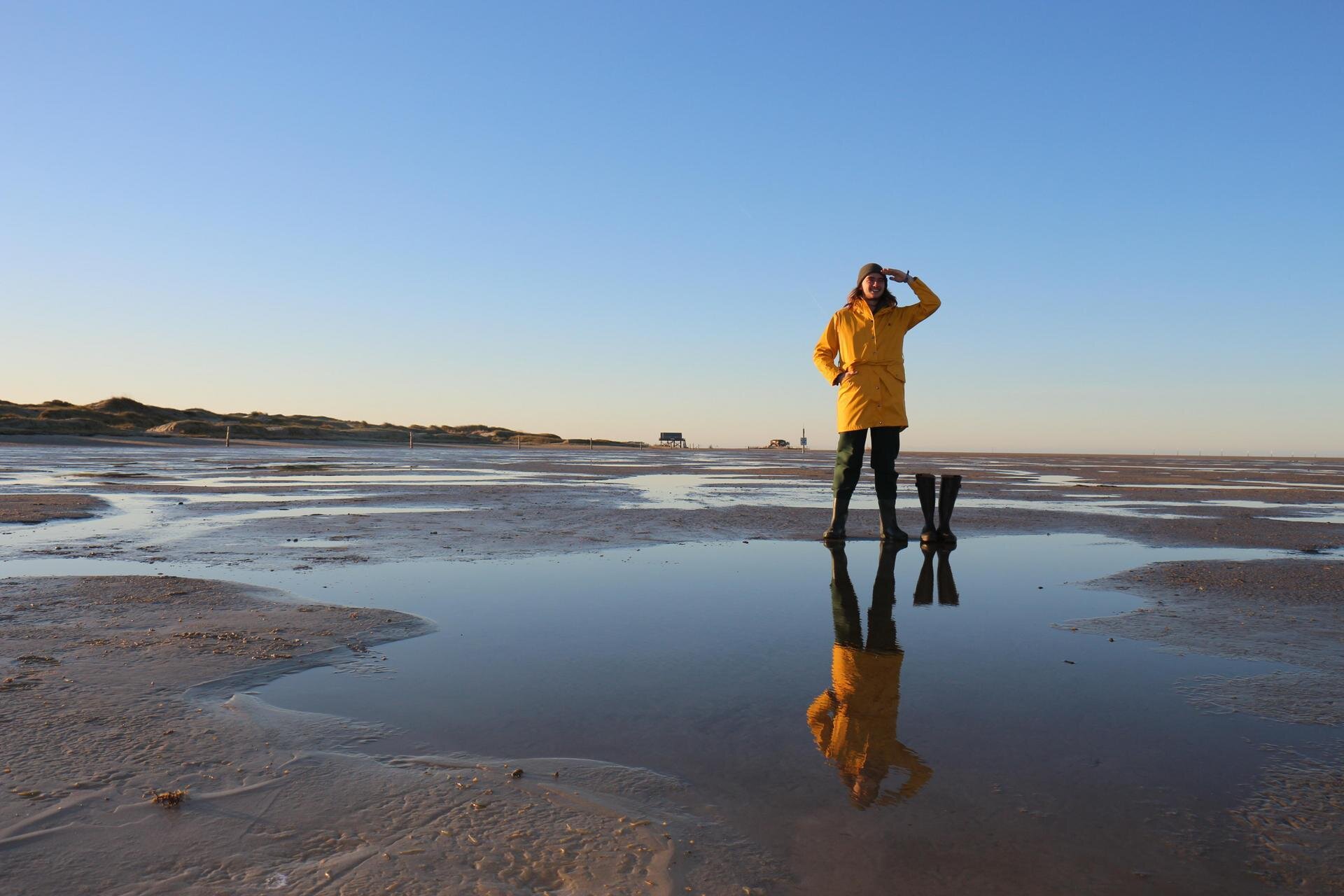
On stormy fall days, a true North Frisian naturally wears his Friesennerz (traditional yellow rain coat)—the classic among rain jackets. It’s bright yellow and the perfect companion, especially on windy, rainy days. 

Add a pair of matching rain boots, and the outfit is perfect.

Our tip: On stormy, rainy days on the coast, it’s best to skip the umbrella altogether. In weather like this, it’ll just snap—literally.

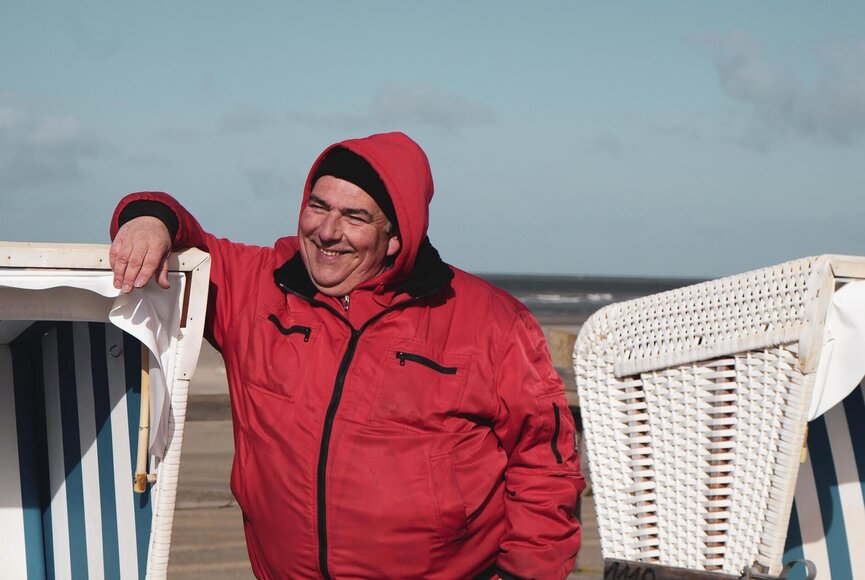
Our beach attendant is leaning against a beach chair, laughing
That's what serenity is all about!

Our Mindset

Up here in the far north, the motto is: No stress, take it easy! Or, as the North Germans say: "Mach mal sutsche!" (take it easy)  

Fortunately, we Northern Germans are practically born with this sense of calm.  

In stressful situations, we stay calm, look at the problem rationally rather than emotionally, and don’t let anything rattle us.  

When we do things, we do them right—with purpose and common sense. Fast-paced living and superficiality have no place here on the North Sea coast. Why make friends if they won’t last long anyway, and why stress out if it doesn’t make things go any faster in the end? 

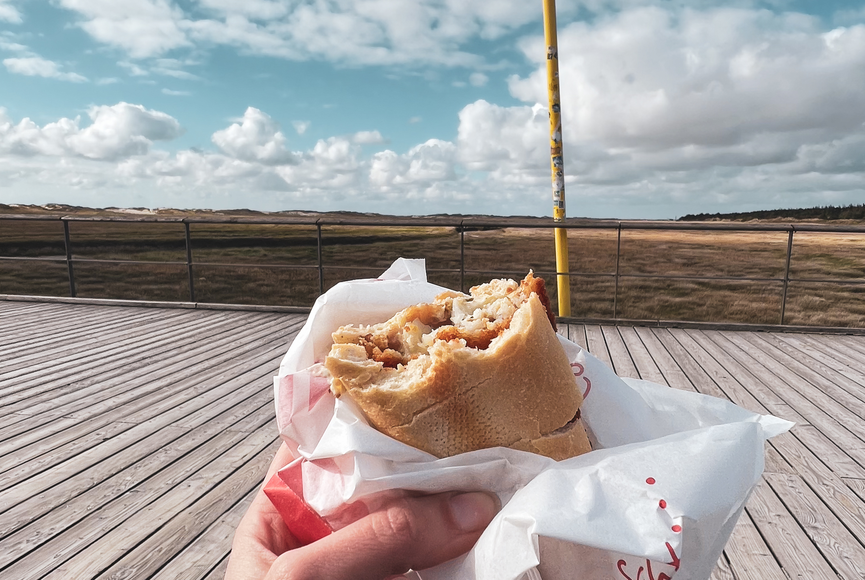
Fish sandwiches on the pier
Don't underestimate it!

Our Food

You might think that we North Germans live primarily on fish sandwiches. Well, that’s not entirely off the mark, because we never say no to a good fish sandwich.

But kale and elderberry soup are also highly sought after here in the far north and are a must, especially on cold winter days. One thing is certain: you shouldn’t underestimate Northern German cuisine.

This Is What the North Tastes Like

Want to enjoy Northern German cuisine? Our peninsula is home to great restaurants, cafés, and Eiderstedt specialties that you absolutely must try! 

Northern German cuisine

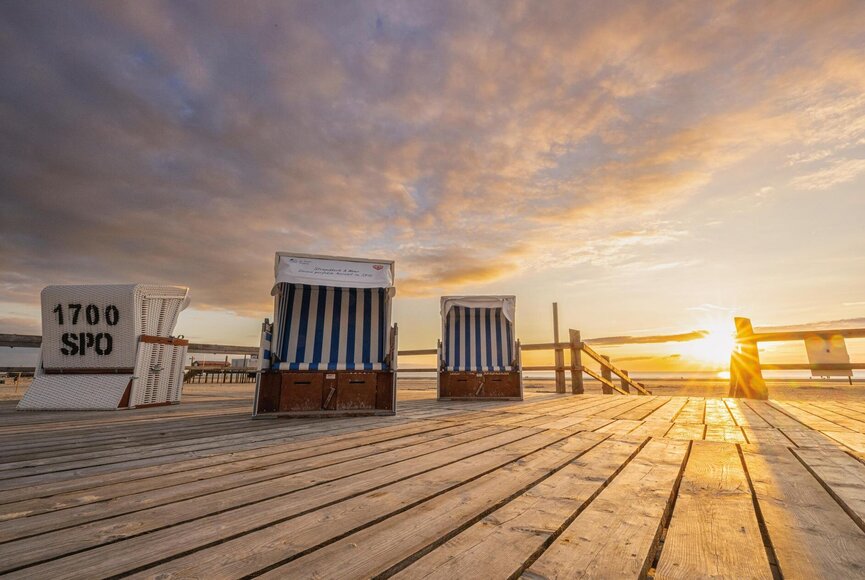
Beach chairs on a platform at sunset
Chilling out in a beach chair

Our Favorite Pastime

There are good reasons why we have so many beach chairs here on the North Sea. We Northern Germans also like to soak up a little sun in one of the many beach chairs here. And since we Northern Germans are just nice people, we’re of course happy to share our favorite wicker chairs with you. 

So come on by—there’s no better place than a beach chair! 

Book a beach chair 

Our Podcast "Deichmomente"

Everything You Need to Know About Beach Chairs
Illustration eines Rettungsrings

Eiderstedt Traditions

You can't miss these!

Our language, our sense of humor, our clothing, our mindset, and our great food—isn’t there something else missing? 

Of course—our Eiderstedt traditions, naturally. From traditional folk dancing, shanty choirs, ring riding, "Boßeln" (bosseling), and "Klootstockspringen," we’ve got it all.

Traditional regional costumes are often part of typical North German festivals and customs. The Eiderstedt costume is characterized by its black gown, white bonnet, gold-colored belt, and shoulder collar. In the past, this traditional attire was worn on festive occasions. Today, the traditional dance groups from St. Peter-Ording and Eiderstedt perform at special events and regional festivals.

Shanty choirs are part of the musical traditions of the North Sea. Shanties were traditionally sung to help sailors and seamen with their work on board. The shantyman always set the beat. The lyrics often deal with special experiences or the harsh life at sea, but they also frequently express longings and dreams. The shanty choir “Die Seeräuber” is from St. Peter-Ording.

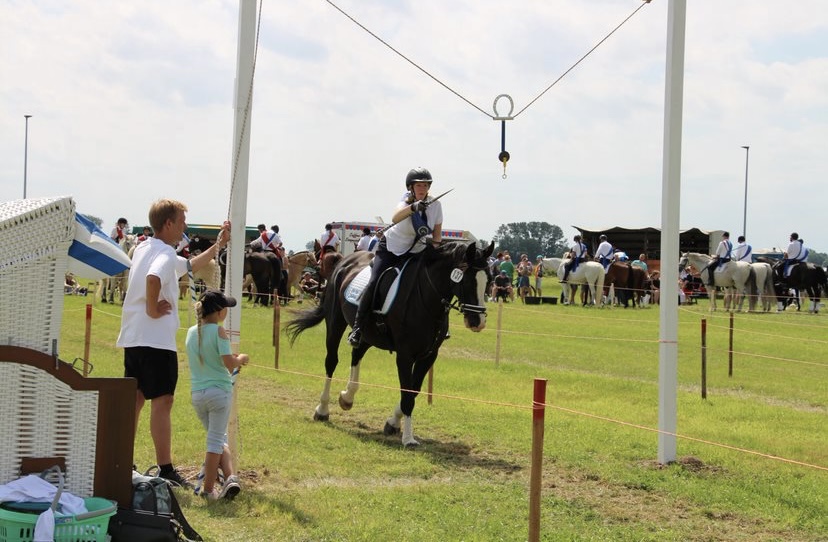
Another popular sport on the Eiderstedt Peninsula is ring riding. Here’s how it works: The horse and rider gallop toward a small ring hanging from a “gallows.” The goal of ring riding is to pierce the ring with a lance. This requires the utmost concentration, because the ring is very small and difficult to hit at high speed! The rider who pierces the most rings wins. The winner is then immediately crowned king or queen. In addition, there are still festive parades featuring marching bands and traditional folk dances. You can find out when the ring riding takes place in our event calendar.

Event Calendar

By the way: Since March 2021, this tradition has even been recognized as part of the intangible cultural heritage.

"Boßeln" (bosseling) is a widespread tradition throughout Eiderstedt. In this sport, players must roll a small, lead-filled wooden ball to the finish line of a designated course in as few rolls as possible. This sport likely originated in the Middle Ages, when the Frisians tried to pelt enemies with clay balls. Today, Boßeln tournaments are held regularly along the North Sea coast.

"Klootstockspringen" is still quite common throughout North Frisia. Especially when hunting in the koog, people use the 6-meter-high pole to jump over the ditches in the marshlands. To do this, the pole is placed vertically in the ditch, and the hunter swings along it to reach the other side.