

FAQ and Information from A to Z
Do you have another question? Take a look at our FAQ section, the “Frequently Asked Questions.”
We’ve also compiled all the important topics about St. Peter-Ording and the Eiderstedt Peninsula for you and sorted them alphabetically—the links will take you to our corresponding topic pages.
You can also get help right here: Our tourist information offices in the local districts "Dorf" and "Bad" are happy to answer your questions and provide personalized assistance.
info@tz-spo.de / 04863 999 0

Frequently Asked Questions
The Tourismus-Zentrale St. Peter-Ording has decided to introduce a camera-based parking system. This applies to the beach parking lots in Ording and Böhl, the dike parking lots in Ording, Böhl, and on the Südstrand, as well as the Hungerhamm parking lot.
On our “Parking” page, we answer frequently asked questions (FAQs). Please note that these will be updated gradually to reflect the current situation.
No, the formation of quicksand is not a new phenomenon in St. Peter-Ording. It has already occurred in recent years and decades—mostly following heavy and prolonged rainfall and high water levels—but generally in more remote areas of the beach. In April 2024, however, quicksand formed near the pier and the Arche Noah stilt house restaurant.
Response to the Quicksand in April 2024:
The hazardous areas were marked on-site with caution tape and warning signs. There was an immediate danger in these areas. Our staff at the Tourism Office and employees of the Public Order Office inspected these sections of the beach several times a day. We provided updates on new developments on our website and via social media.
General Information on Quicksand:
When loose sandy soil is heavily saturated with water and therefore has little load-bearing capacity, it is referred to as quicksand. In many cases, quicksand areas are not recognizable because the sand’s surface looks normal. Although the sand’s surface feels firm, it lacks load-bearing capacity. Because of the liquid sand-water mixture beneath the surface, you will sink into it when walking on this area. Quicksand behaves like a viscous liquid. However, the body has enough buoyancy to prevent you from sinking into the quicksand. Getting stuck in quicksand becomes life-threatening if the rising tide poses a risk of drowning or if prolonged entrapment leads to hypothermia and dehydration.
Recommendations: What should I do if I get stuck in quicksand?
If, despite all precautions, you find yourself in a quicksand zone, it is recommended that you remain calm and take a few steps backward onto solid ground, or use your hands to brace yourself against the ground behind you and pull your legs out of the sand. Gently moving your legs back and forth or in small circles can help loosen the dense sand slightly. However, you must avoid kicking violently, as this will cause you to sink deeper.
If you cannot free yourself from this situation on your own, draw attention to yourself and have passersby call for help. As a general rule, it is recommended that you always carry a cell phone or smartphone with you so that you can call for help (112) in an emergency.
The leash law for dogs applies year-round in St. Peter-Ording, as it helps protect animals and nature throughout the year and also promotes consideration for others.
To ensure your four-legged friend can still run around and burn off some energy, dog parks have been established in St. Peter-Ording. You can find all the information on this topic here.
First, you can book some of our treatments through our online store, and second, you can of course contact us by phone to schedule appointments for treatments.
We’d be happy to advise you on creating the best treatment plan for you.
Contact the health and wellness center (GWZ)
Email: gesundheit@tz-spo.de
Phone: +49 4863 999-124
You can find all the information about the services we offer at the GWZ here.
In St. Peter-Ording, revenue from the visitor’s tax helps maintain high standards for tourism. It is used, for example, to fund lifeguard services, public facilities, maintenance, cleaning, and recreational activities in SPO. You can find detailed information on our page about the guest card and visitor’s tax.
No, there is currently no visitor’s card for Eiderstedt. This means you are not required to pay a visitor’s tax for your stay on the peninsula. A visitor’s tax is only charged in the towns of St. Peter-Ording and Tönning.
You can find all the information about the St. Peter-Ording guest card here.
You can learn more about the Tönning guest card on the Tönning website.
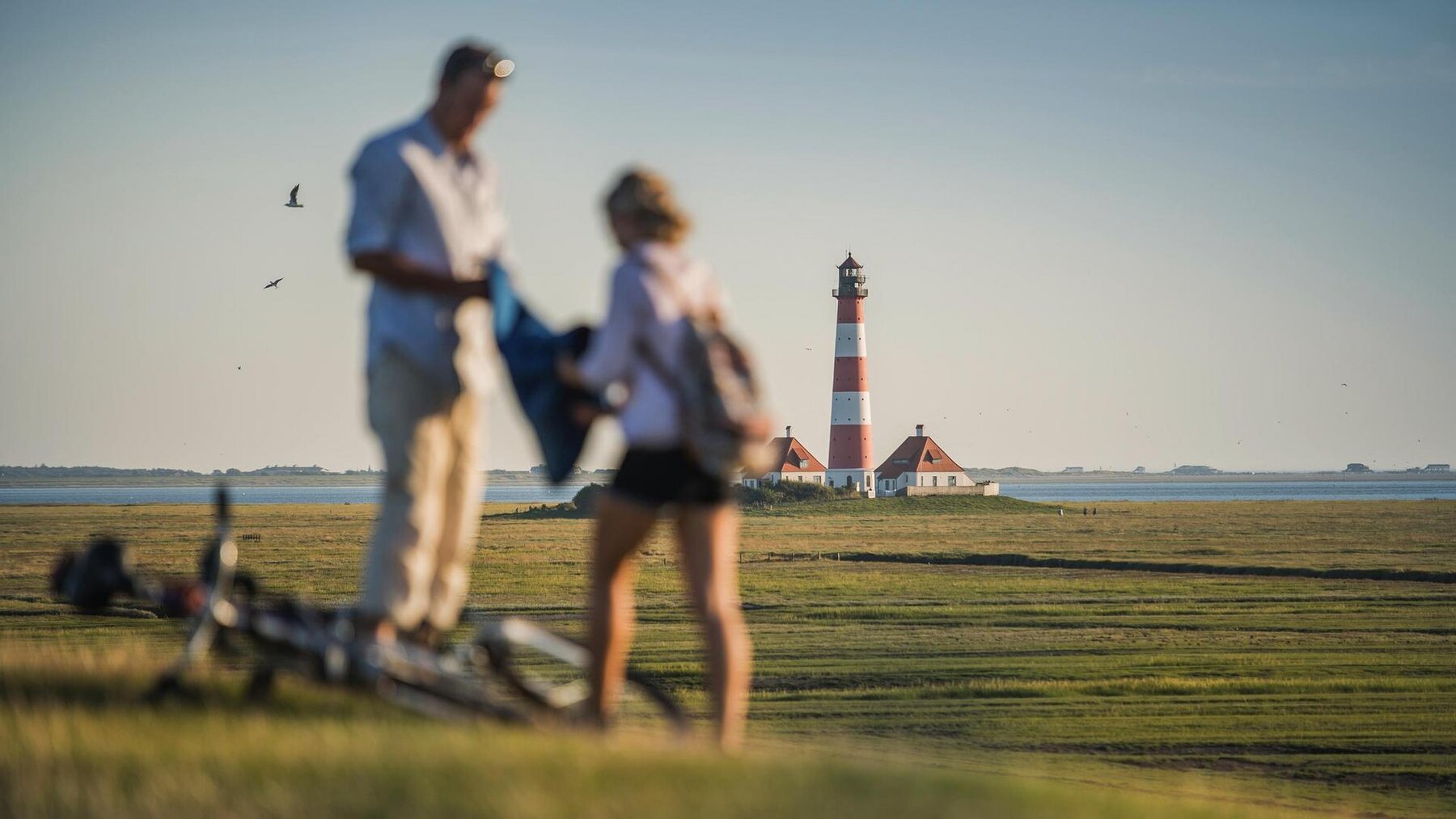
Even though 70% of vacationers in St. Peter-Ording think the lighthouse "Westerhever" is located in SPO, that’s not the case. The lighthouse is in Westerhever, which is a separate municipality on the Eiderstedt Peninsula.
But don’t be sad—it’s only about 15 km from St. Peter-Ording to the lighthouse, so the route is perfect for a bike ride.
Plus, SPO has its own lighthouse—the Böhler Lighthouse. So that’s double the lighthouse fun right here in Eiderstedt!

Is anything still unclear?
- News
- Fishing
- Getting Here
- Aqua Fitness at the Dünen-Therme
- Places to Visit
- Swimming Spots
- Train
- Accessibility in St. Peter-Ording
- Beach Volleyball
- Biikebrennen (traditional fire to say goodbye to winter)
- Library in St. Peter-Ording
- Bus
- Camping
- Privacy Policy
- Long-term parking pass for St. Peter-Ording
- Digital Vacation Guide
- Dünen-Hus
- Dünen-Therme
- "Eidersperrwerk" (flood barrier)
- Electric vehicle charging stations in St. Peter-Ording
- Erlebnis-Hus
- Erlebnis-Promenade in St. Peter-Ording
- Adventure Shop
- Tell Me About It! In Eiderstedt
- Bike Tours
- Bike Rentals in St. Peter-Ording
- Nudism on the Beach in St. Peter-Ording
- Galleries
- Dining
- Guest Card in St. Peter-Ording
- health and wellness center
- Tides
- Golf
- Remedies
- Weddings
- Dogs in St. Peter-Ording
- Canoe
- Churches
- Kite buggy
- Kiteboarding
- Art
- Spa
- Visitor's tax/guest card in St. Peter-Ording
- Eiderstedt Landscape
- Böhl and "Westerhever" Lighthouses
- Massage at the Dünen-Therme
- Museums
- Sustainability
- Nature & National Park
- North Sea Fitness Park
- Local Bus in St. Peter-Ording
- Local districts of St. Peter-Ording
- Easter
- Parking in St. Peter-Ording
- Stilt Houses
- Physical Therapy at the Dünen-Therme
- Podcast "Deichmomente"
- Brochures
- Travel Insurance
- Horseback riding
- Horse Pass for the Beach in St. Peter-Ording
- Sauna at the Dünen-Therme
- Boat Tours
- Sulfur spring
- Swimming pool at the Dünen-Therme
- Swim classes at the Dünen-Therme
- Shopping
- New Year's Eve
- Playgrounds
- Stand-Up Paddleboarding (SUP)
- Beach in St. Peter-Ording
- Beach Chairs
- Beach wheelchairs
- Beach sailing
- Surfing
- Gas stations
- Tourist Information
- Accommodations
- Events
- Hiking & Walking
- Wadden Sea
- Mudflat Hikes
- Webcams in St. Peter-Ording
- Christmas
- Wellness
- Animal park "Westküstenpark" & "Robbarium" (area for seals at the animal park)
- Weekly markets
- Workation