

- Stay within sight of the mainland.
- Do not leave paved paths.
- Carry a cell phone so you can call 112 in an emergency.
- In an emergency: Look for the GPS emergency signs on wooden posts on the SPO sandbank and provide the location number to rescue personnel.
- Follow the general guidelines for mudflat hikes.
When the harsh wind drives the sea ashore
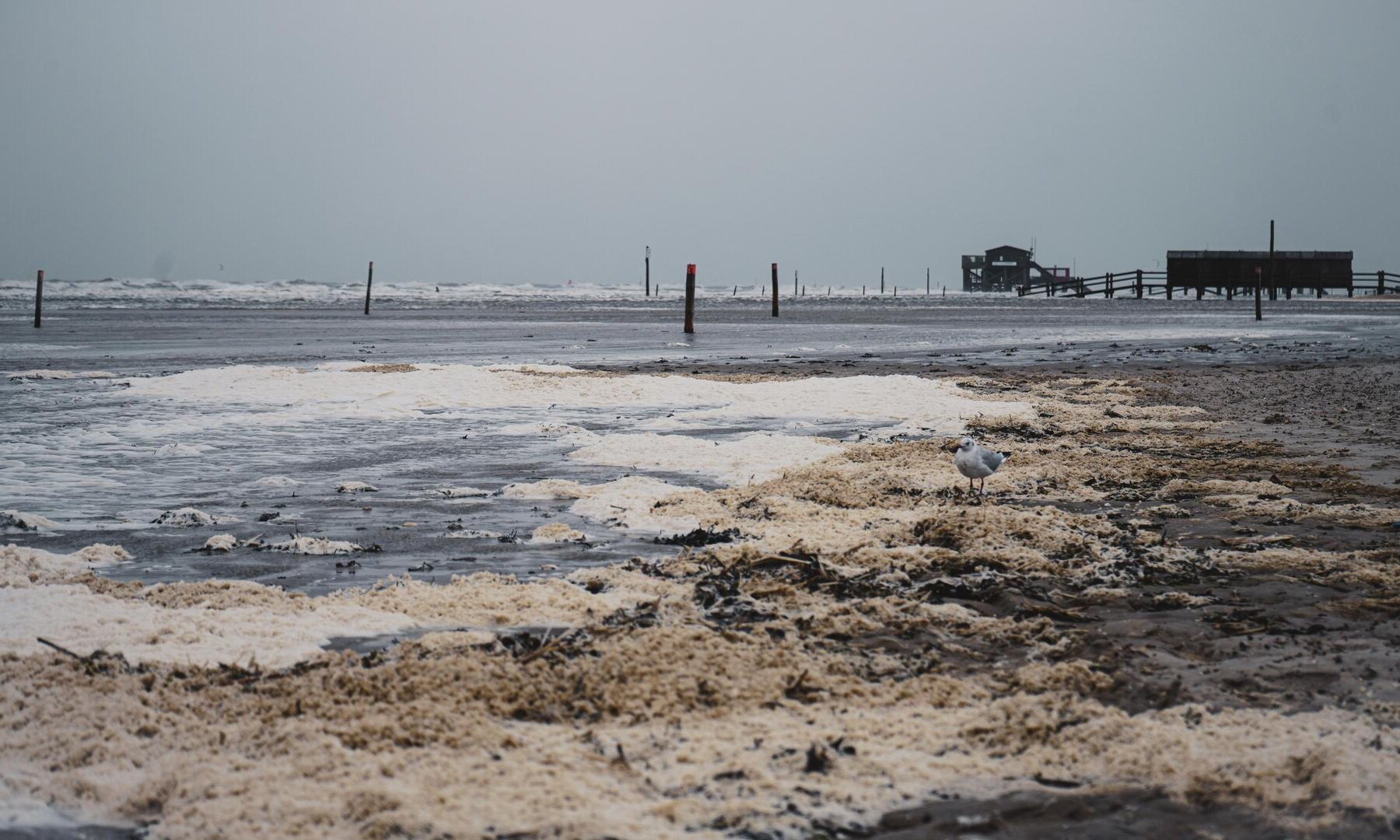
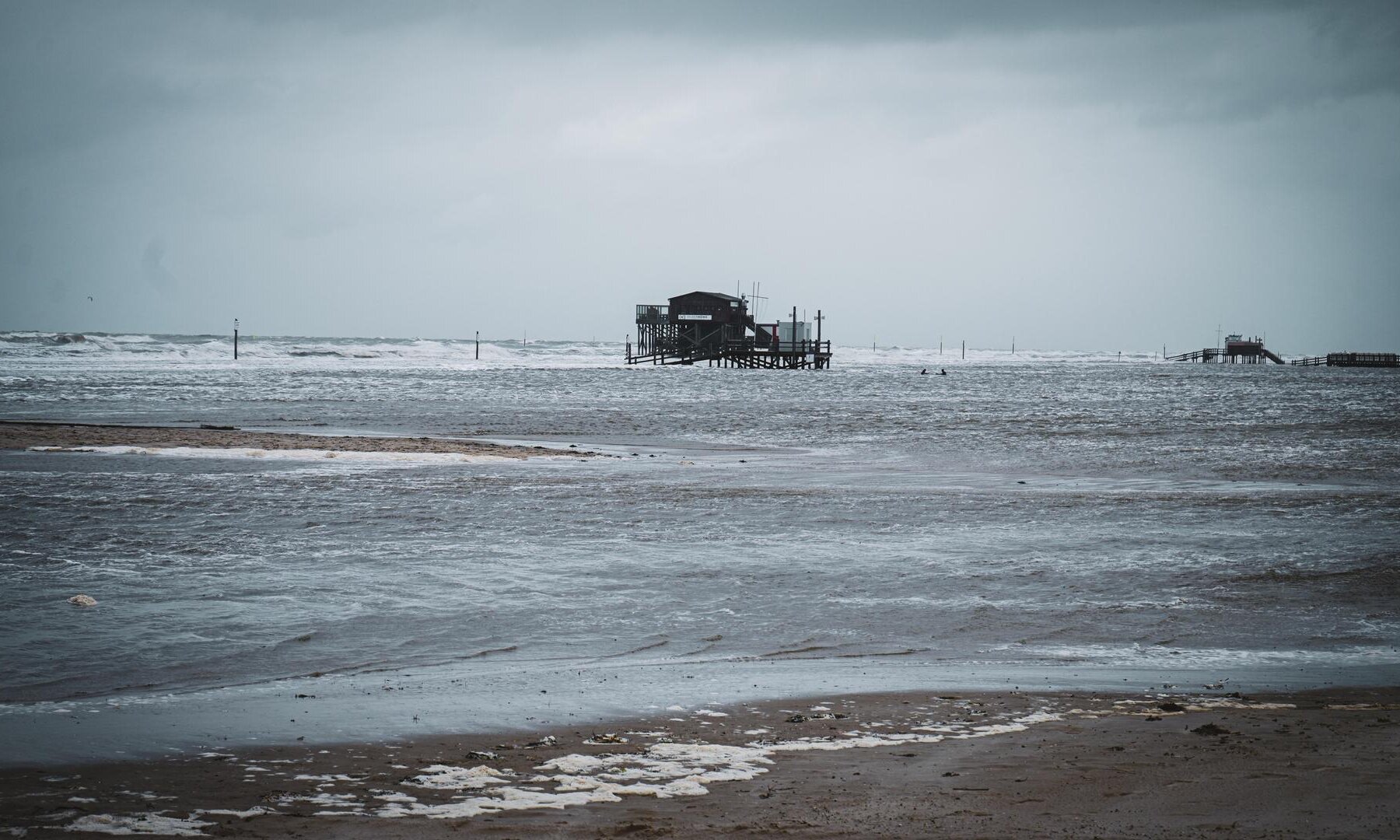
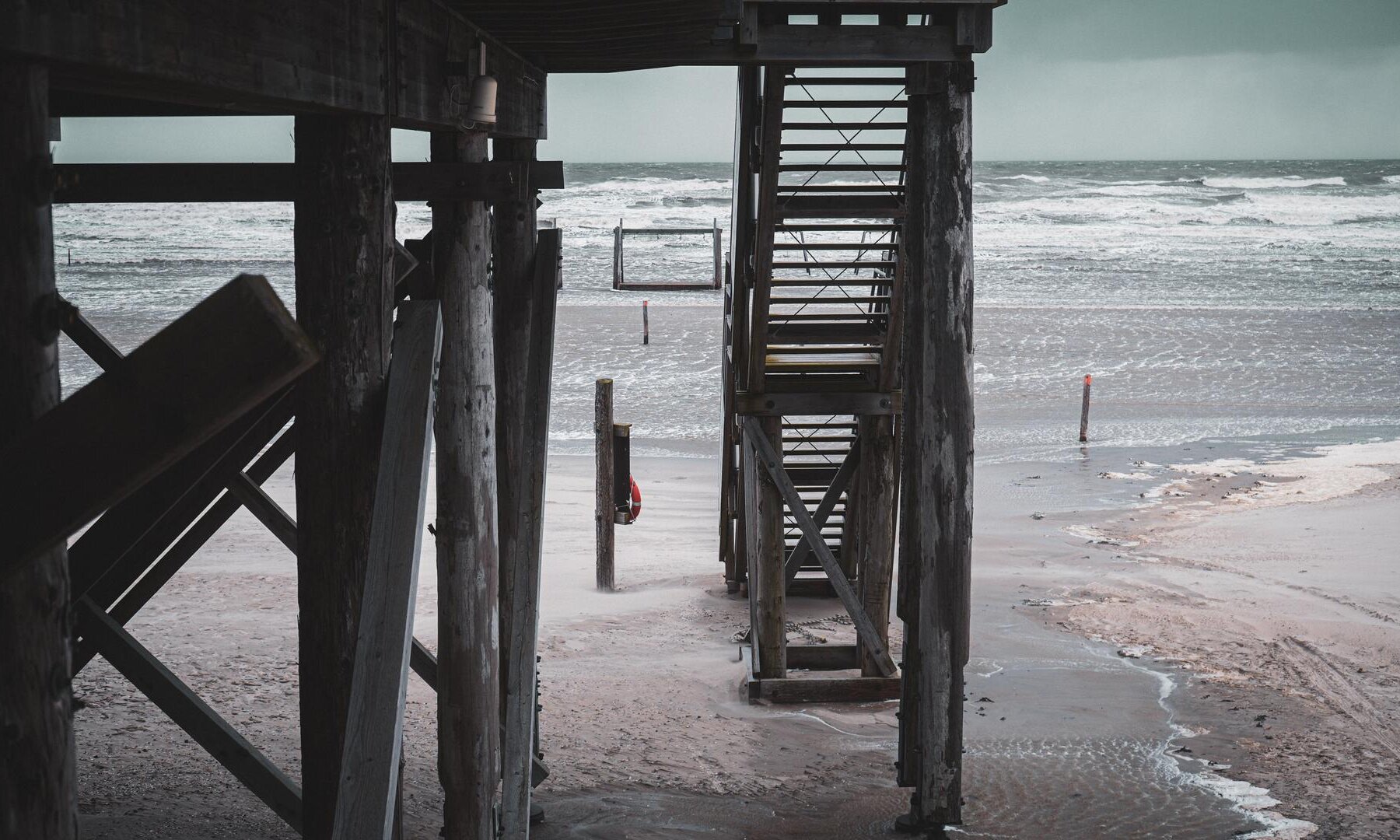
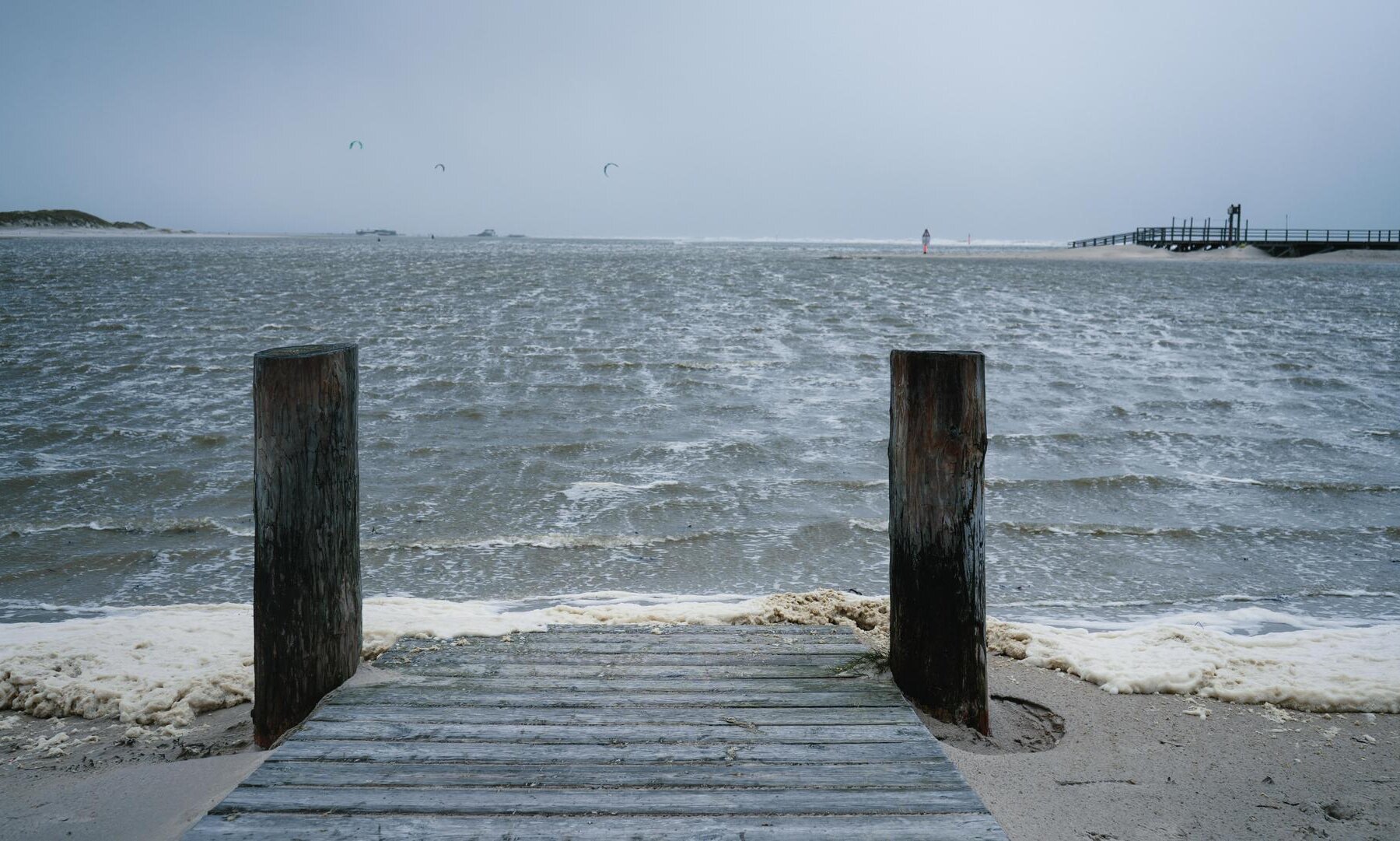
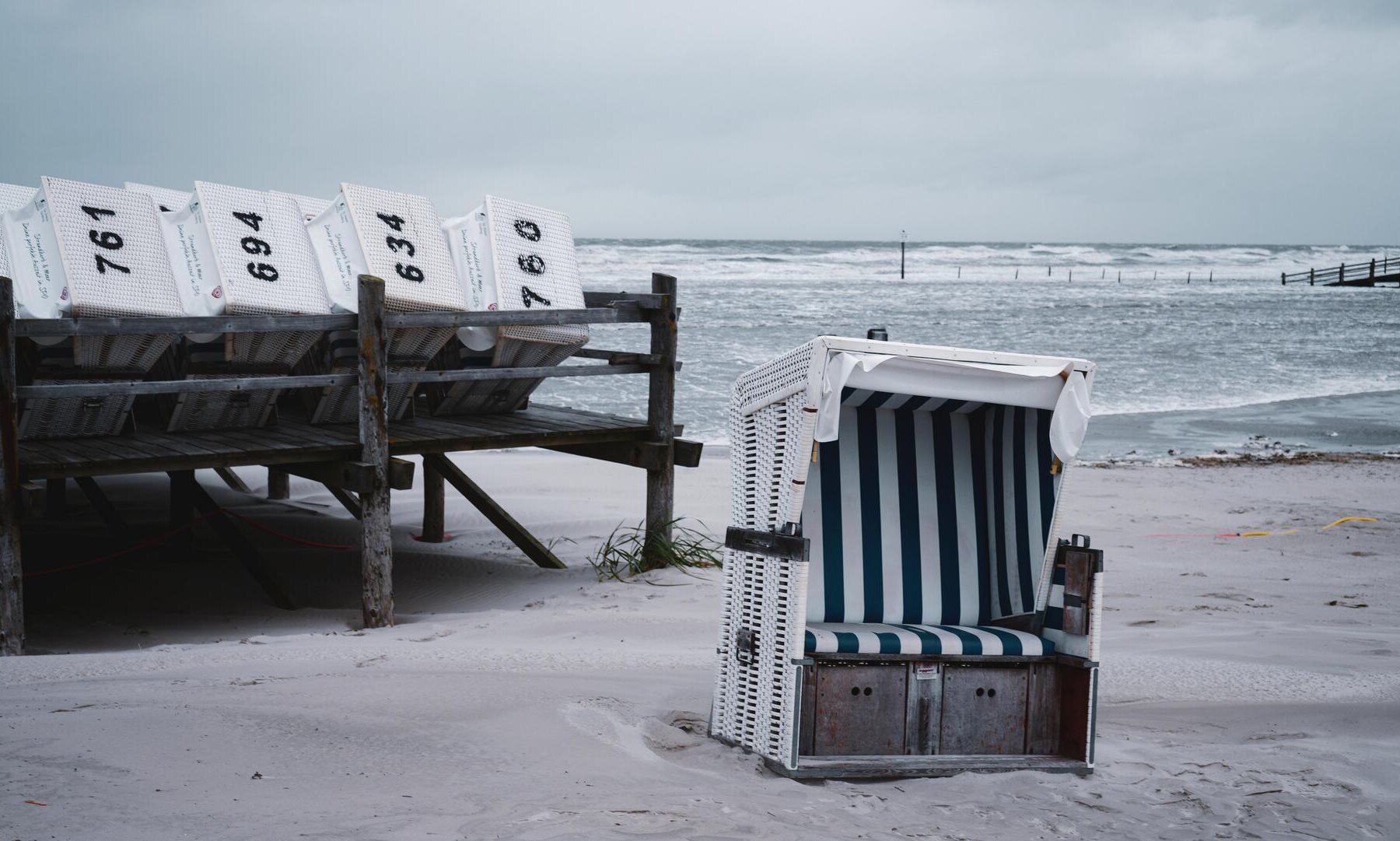
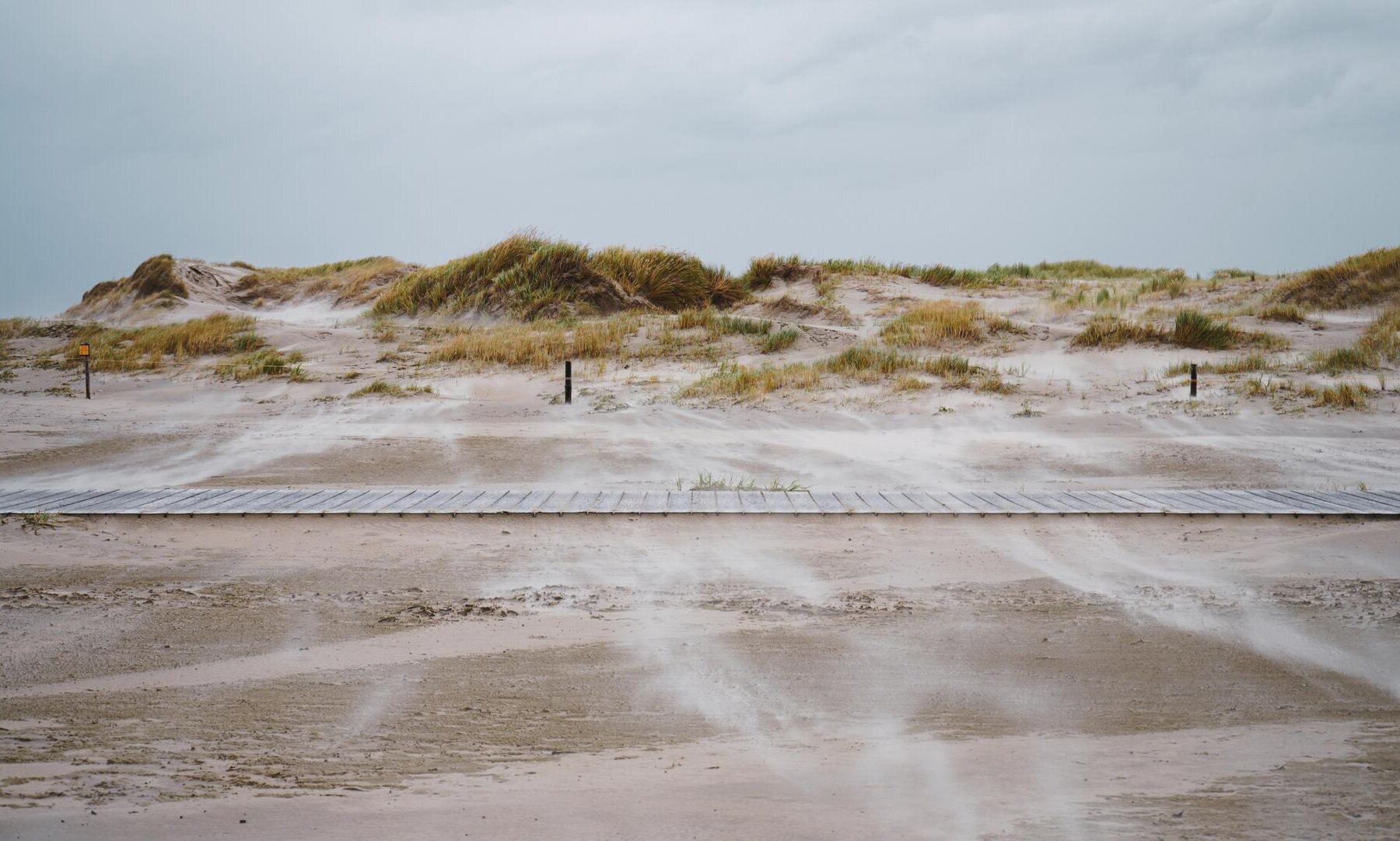
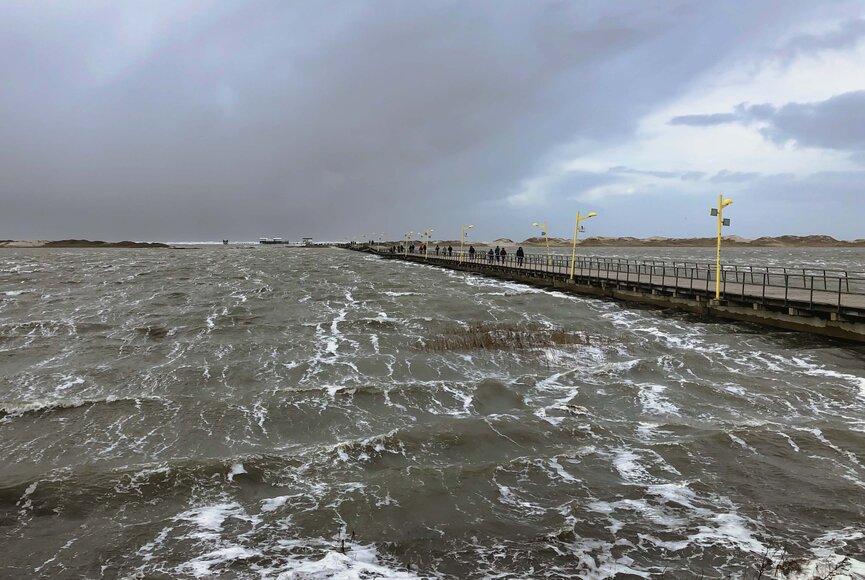
It’s more than just a “breeze”—during a storm surge, things can get pretty intense. Especially in the fall and winter, you can sometimes see the forces of nature raging in St. Peter-Ording and Eiderstedt, driving the waters of the North Sea right up to the edge of the dunes or even to the dike, and obscuring visibility with thick sea fog.
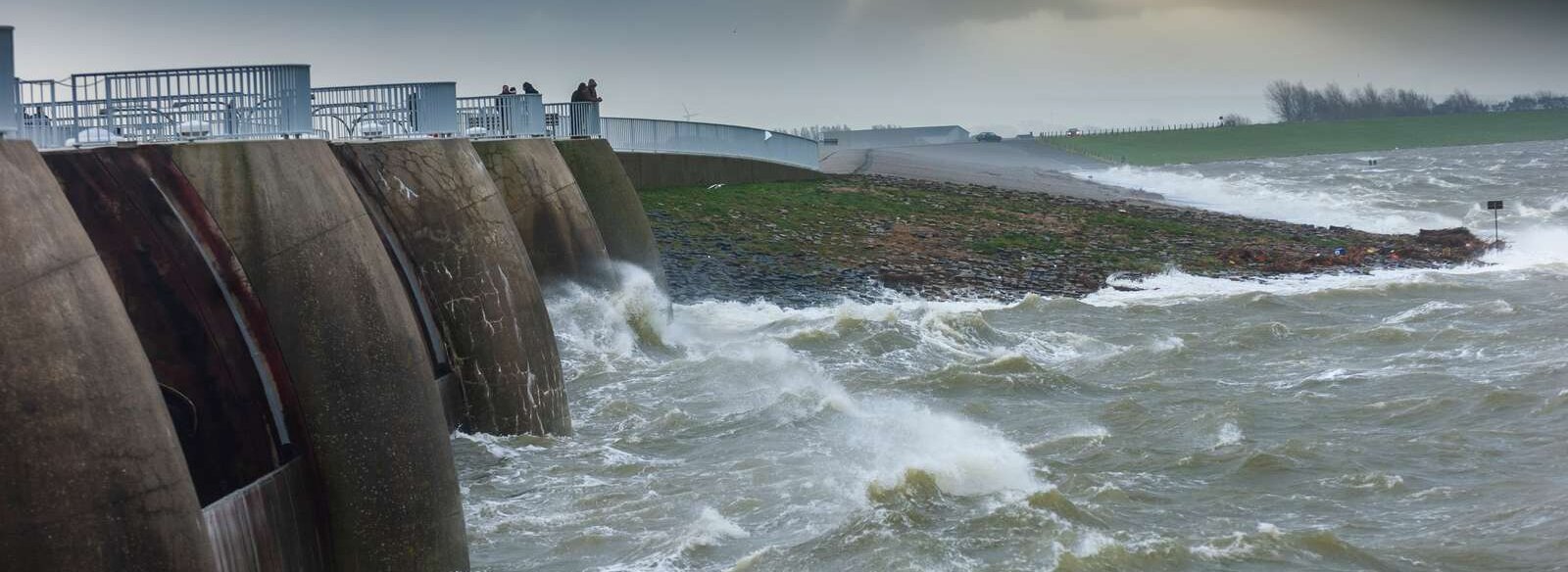
But be careful: Strong winds and high waves are impressive, but also quite dangerous. During a storm surge, the North Sea can rise very quickly and suddenly, flooding large parts of the sandbanks and the foreshore.
Out and About to See a Natural Spectacle
Up Close and Personal
During a storm surge, the North Sea can rise very quickly and suddenly, flooding large parts of the sandbanks and the foreshore. If you’re out on the beach in this rough weather, bundled up in a Friesennerz (traditional yellow rain coat) and rain boots, there are a few things to keep in mind!
© TZ-SPO
Stay Safe on the Road
Please note the following
© TZ-SPO
I can't see a thing!
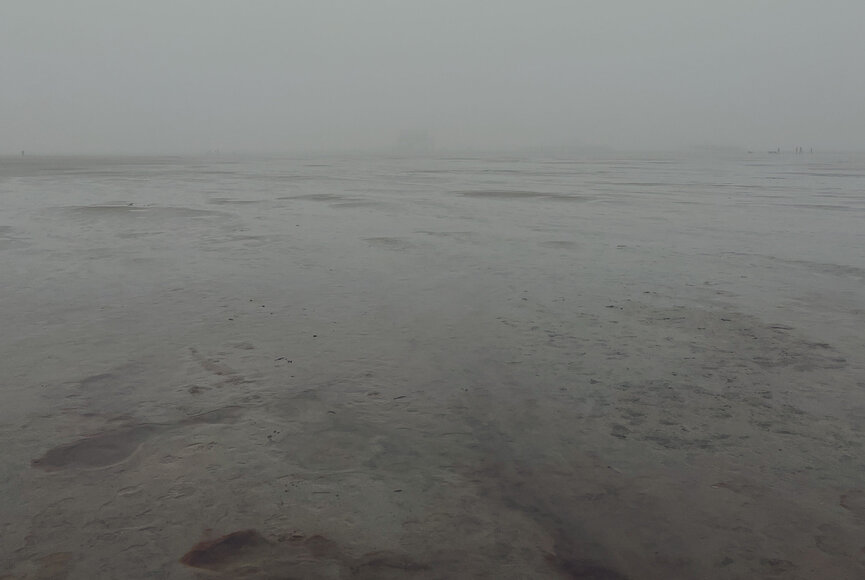
Lake Fog
Lake fog forms when warm air blows over the cold North Sea. This happens mainly in the spring and fall, often in the early morning hours when the sea cools down overnight. When thick fog then shrouds the beach and the sea, it can get quite dangerous. Because, as we North Frisians say, it’s easy to lose your bearings on the beach in the “thick soup.”
If you ever find yourself in lake fog, you should definitely stay close to the dike, the paved paths, and the stilt houses.
Major storm surges in Eiderstedt
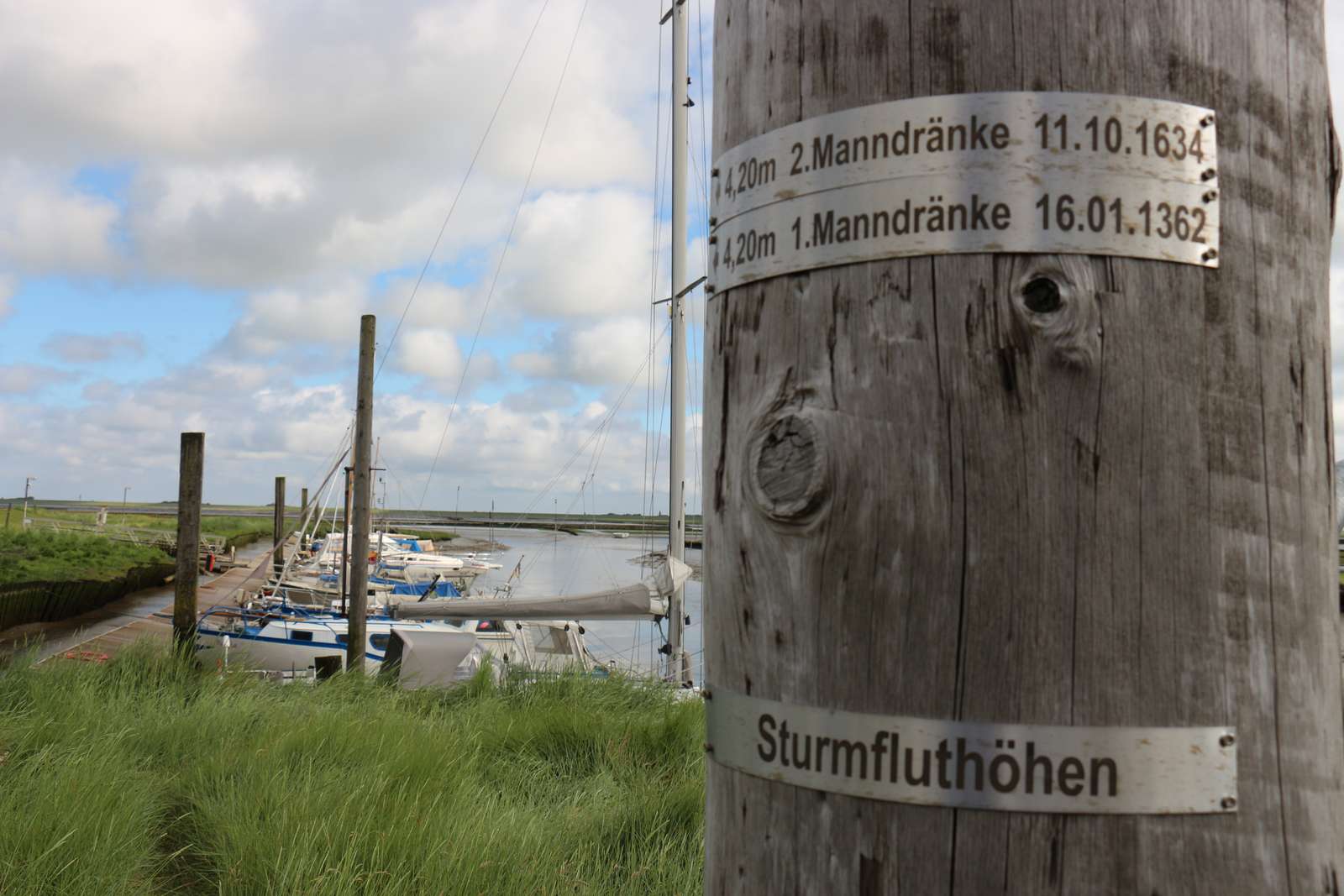
On January 16, 1362, the raging North Sea waves breached numerous dikes and flooded large coastal regions. The Utlande region was eroded, radically altering the coastline and giving rise to the first islands and Halligen off the North Sea coast. Shortly thereafter, the Hever was breached, separating the island of Strand from Eiderstedt.
© TZ-SPO
The dikes broke in almost every place in North Frisia and on the peninsula. In Tetenbüll, 180 residents of Eiderstedt died. The All Saints' Day flood cut off the island of Pellworm from the island of Strand.
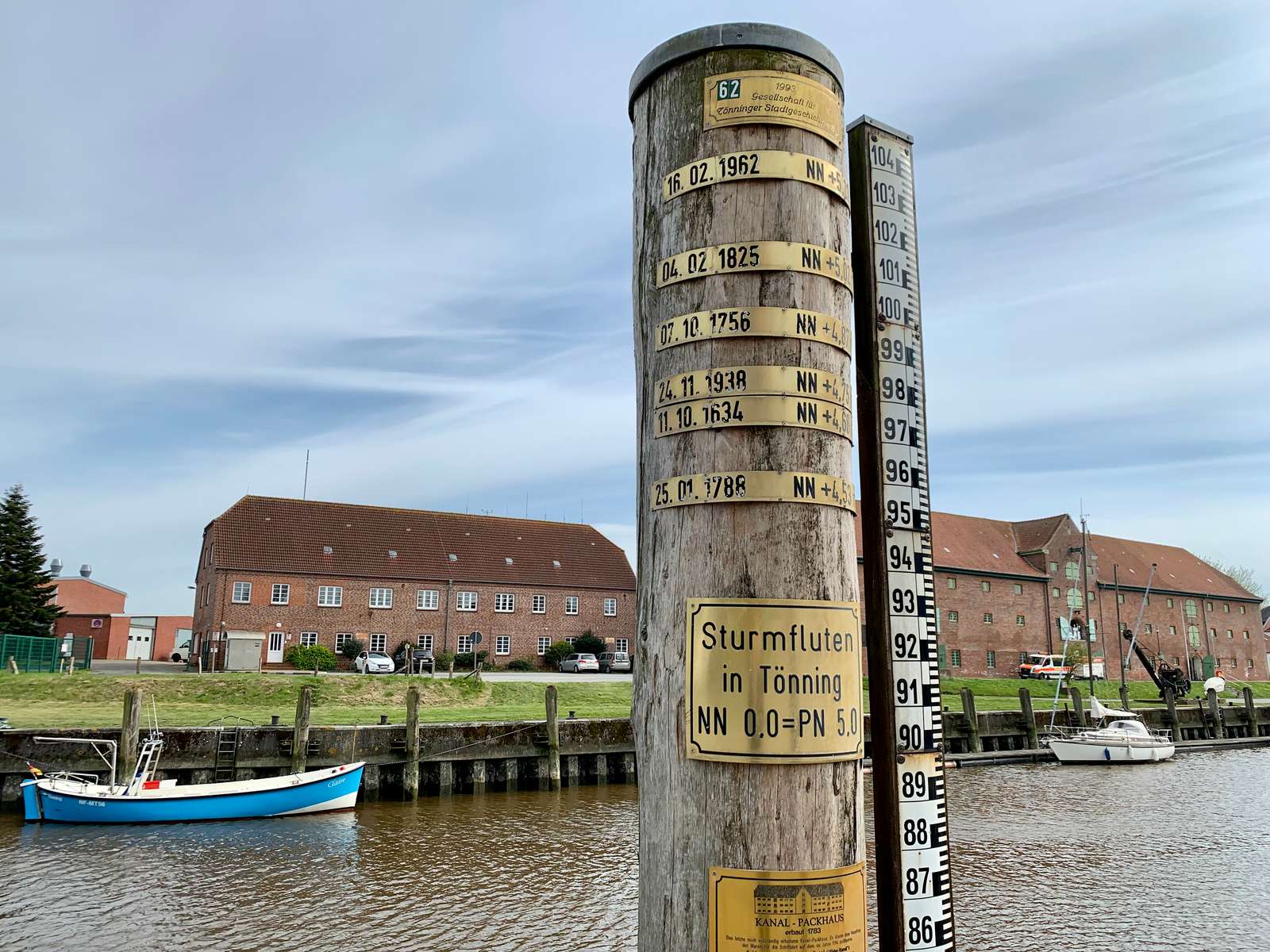
The dikes broke in several hundred places. The island of Strand and Eiderstedt were particularly hard hit by the second major flood. On Eiderstedt, more than 2,100 people and 12,800 animals lost their lives. About 600 houses were destroyed by the raging North Sea waves.
© TZ-SPO
A large stretch of land in front of what is now Eiderstedt was submerged during this storm surge, and the peninsula was flooded with (North Sea) water all the way to Garding.
Today’s Erlebnis-Promenade, and especially the Buhne—the forecourt of St. Peter-Ording’s pier—were flooded in 1927. The ice flood in St. Peter-Ording swept away the pier, which had been completed just one year earlier.
This storm surge had severe consequences along the entire North German coast. Water levels on our peninsula rose to 3 meters above the mean high tide. The dikes broke in several places near Eiderstedt. In Tümlauer-Koog, fishing boats in the harbor were hurled against the dikes. In St. Peter-Ording, the dunes sustained extensive damage. Fortunately, people and animals were able to survive thanks to the dikes, which had been raised starting in 1953.
In January 1976, two storm surges occurred in quick succession; one of them resulted in the highest water levels recorded to that point. Despite an ordered evacuation of the Grothusenkoog in Eiderstedt, the residents stayed behind with their animals. Near Westerhever, three firefighters were swept away by the raging floodwaters but were fortunately rescued in time.
This year, two storms raged through Eiderstedt. In October, Christian devastated the peninsula, sending gusts of up to 172 km/h sweeping across the land and causing the North Sea to rise two meters above mean sea level.
In December, Storm Xaver churned up the sea to 3.5 meters above mean sea level. However, there was no major damage along the dike line around Eiderstedt or inland.
In the fall of 2017, it was “all hands on deck” in St. Peter-Ording. However, Storm Herwart did not cause any major damage to our coastline.

Stormy North Sea
Our podcast episode on storm surges
© Benjamin Nolte
Lifeguards on the North Sea Beach
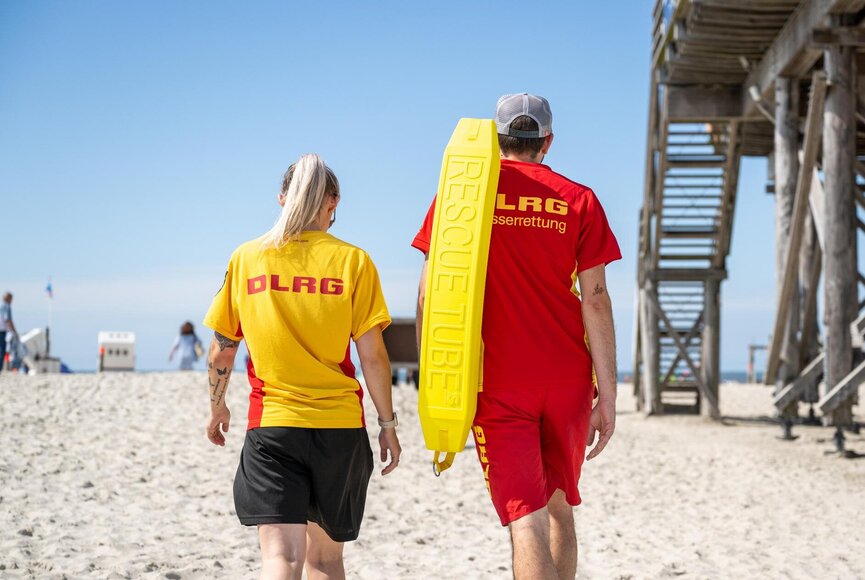
DLRG and SPO Water Rescue Service
Watt hikers failed to take the tides into account, got lost on a sandbank, and are now trapped by the North Sea. A kitesurfer is injured and drifting away in freezing temperatures. Beachgoers have lost their bearings due to sudden sea fog. The DLRG and St. Peter-Ording Water Rescue receive these reports and then respond together with the volunteer fire department, police, and emergency medical services—and this happens quite often.
After receiving a call to the emergency number 112, they arrive on the scene in no time at all with all-wheel-drive vehicles, rescue boats, jet skis, medical equipment, and cold-weather protective suits.
Want another dose of nature?
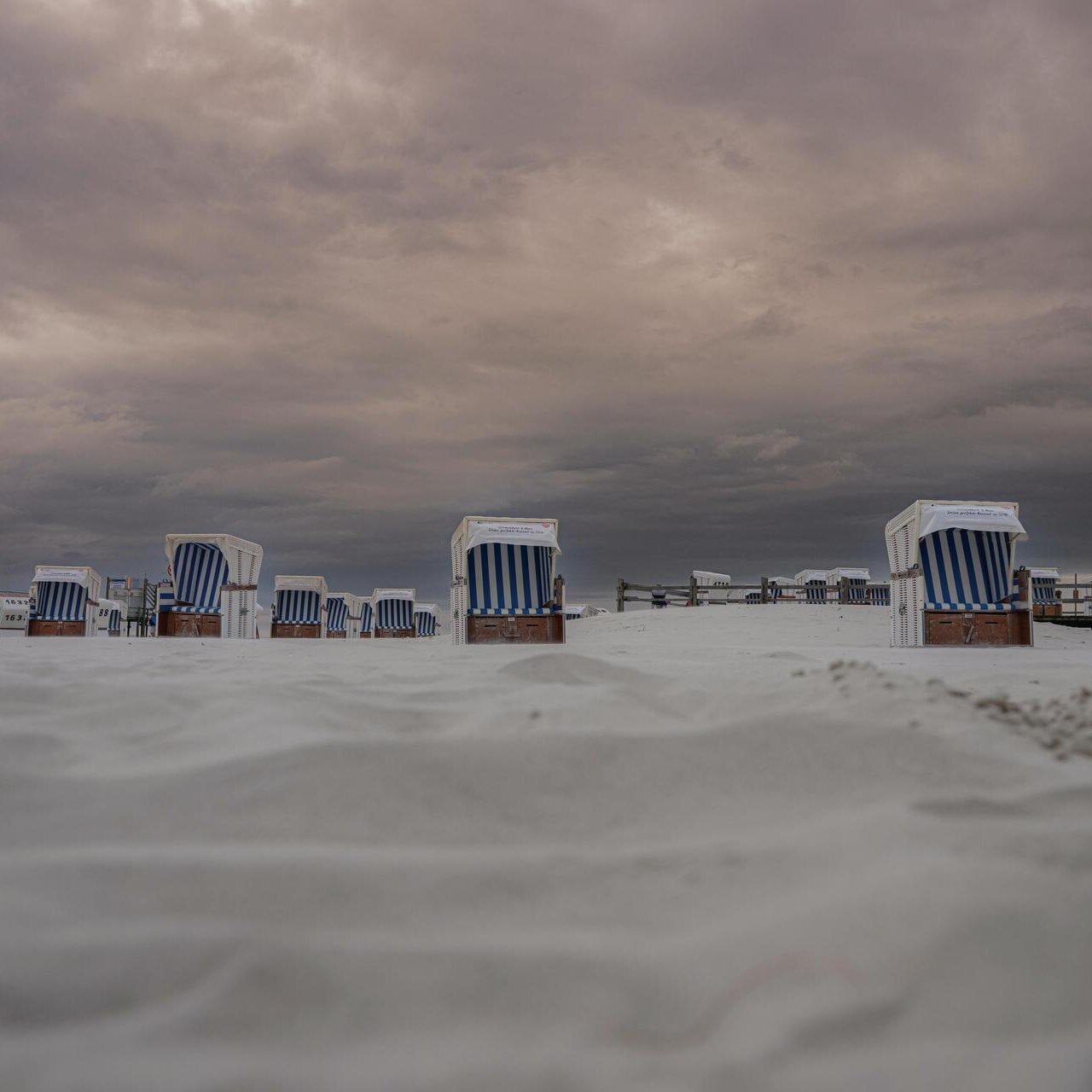
SPO Beach
© Oliver Franke
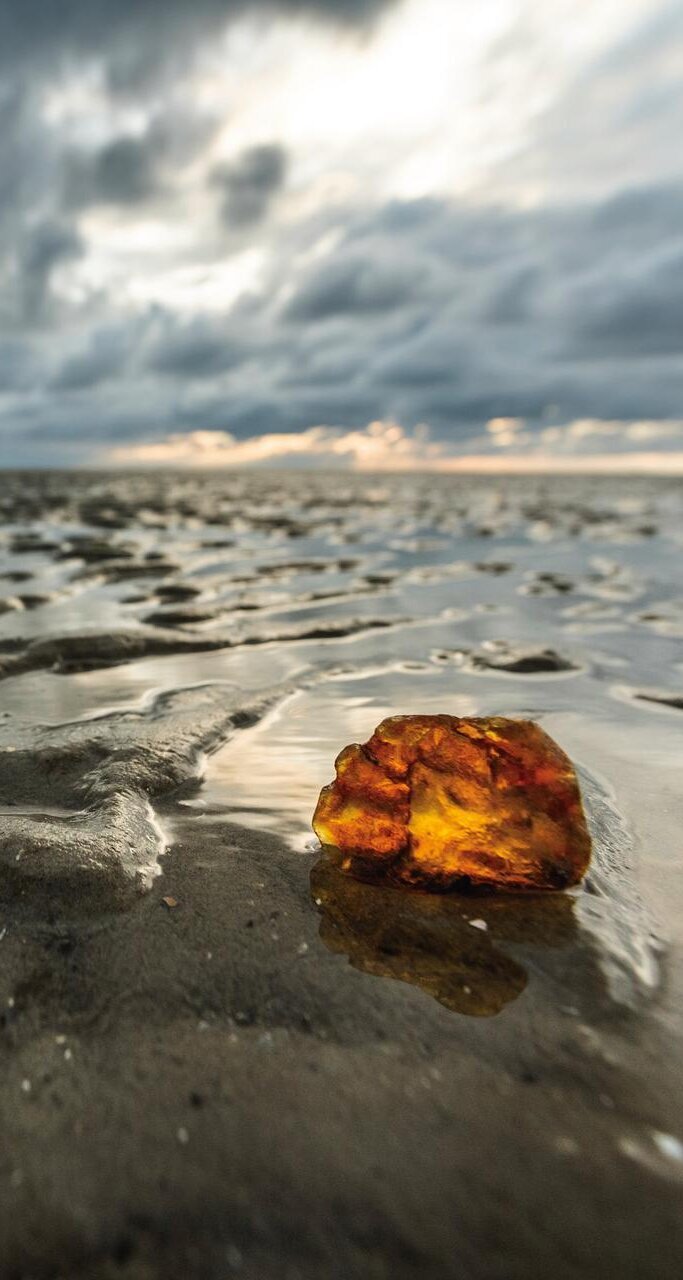
Amber on the North Sea
© Oliver Franke

Animals in Eiderstedt
© TZ-SPO
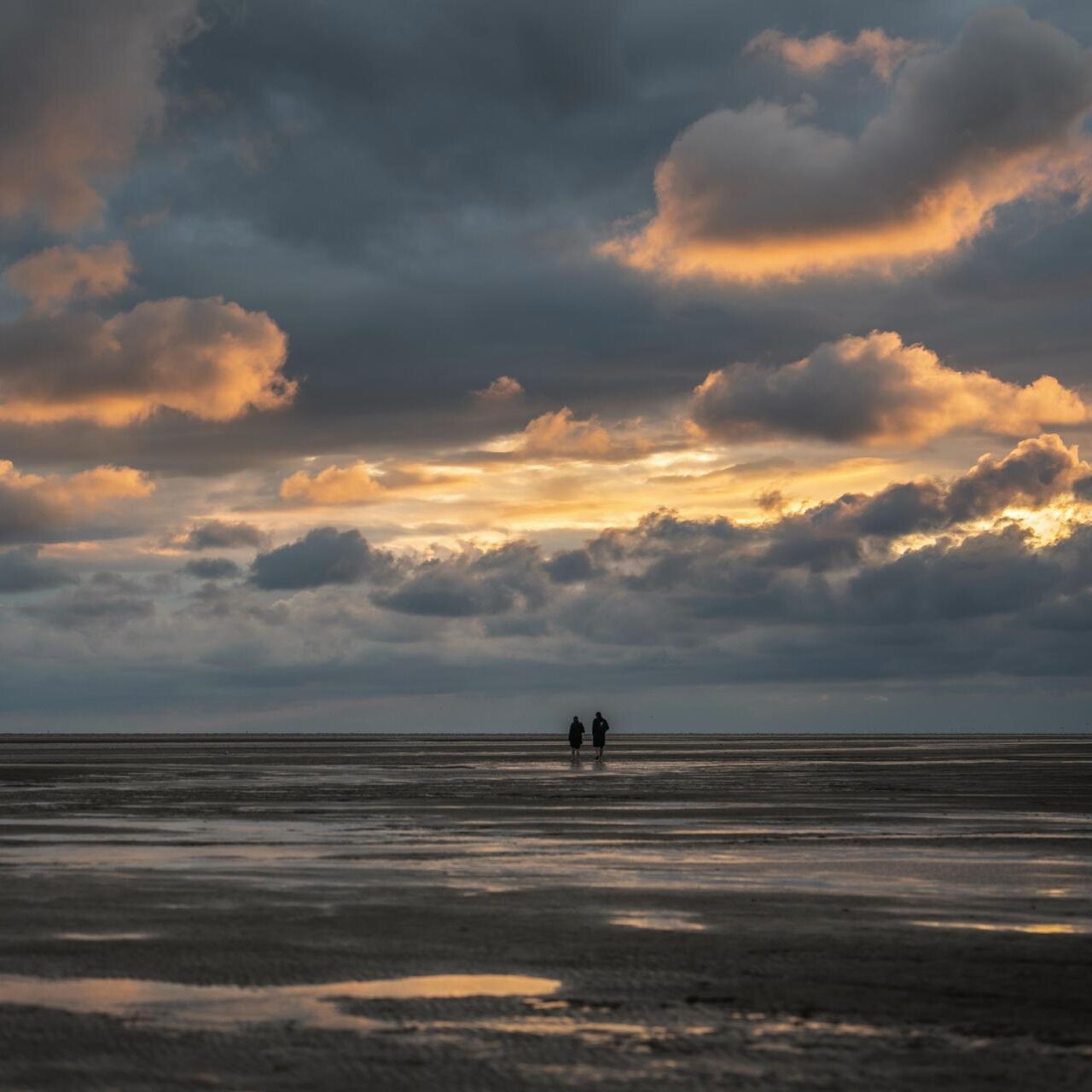
Wadden Sea
© Oliver Franke
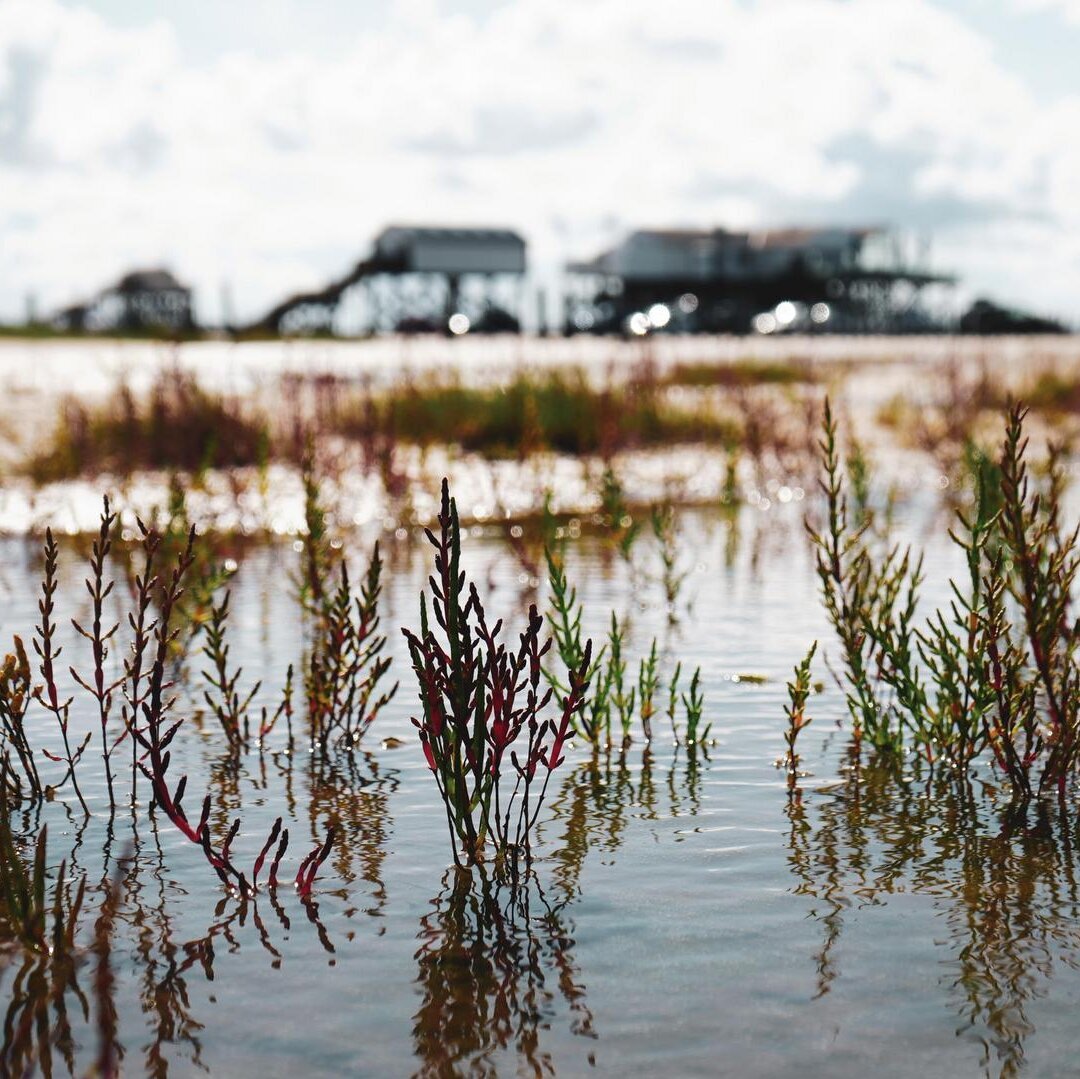
Nature in Eiderstedt
© TZ-SPO